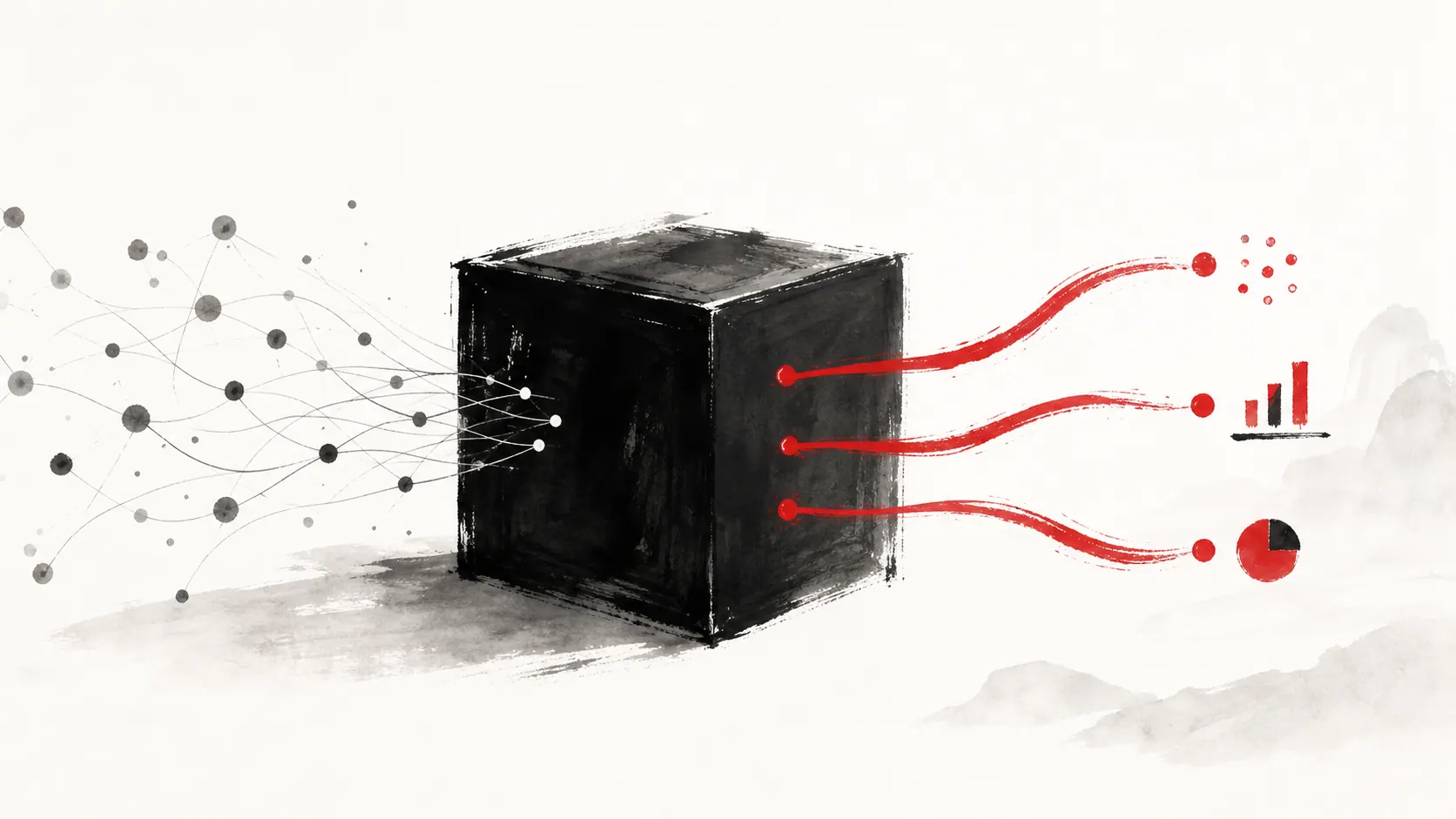
Snapshot date: July 1, 2026. This article uses Geoffrey Hinton's public interviews and written coverage as the starting point, not a short social clip. Hinton is not saying AI is magic. He is saying that modern neural networks are trained rather than hand-written. We design the learning algorithm, feed it data, and evaluate the result. The trained system can then perform useful tasks while its internal route to those answers remains only partly understood.تاريخ اللقطة المعرفية: 1 يوليو 2026. يستخدم هذا المقال مقابلات جيفري هينتون العامة والتغطيات المكتوبة كنقطة انطلاق، وليس مقطعا قصيرا من وسائل التواصل. هينتون لا يقول إن الذكاء الاصطناعي سحر. المقصود أن الشبكات العصبية الحديثة يتم تدريبها أكثر مما تتم برمجتها خطوة بخطوة. نحن نصمم خوارزمية التعلم، ونزودها بالبيانات، ونختبر النتيجة. بعد ذلك قد ينجز النظام مهاما مفيدة، بينما تبقى الطريقة الداخلية التي وصل بها إلى الإجابة مفهومة جزئيا فقط.
What Hinton meansماذا يقصد هينتون
The key distinction is between designing the learning process and directly designing the final behavior. A programmer can write a normal rule, but a neural network learns patterns from examples. After training, the model is a large mathematical object with many interacting parts. That is why it can be useful, surprising, and difficult to explain at the same time.الفارق الأساسي هو بين تصميم عملية التعلم وتصميم السلوك النهائي مباشرة. يمكن للمبرمج أن يكتب قاعدة عادية، أما الشبكة العصبية فتتعلم الأنماط من الأمثلة. بعد التدريب يصبح النموذج بنية رياضية ضخمة فيها أجزاء كثيرة تتفاعل معا. لذلك قد يكون مفيدا ومفاجئا وصعب التفسير في الوقت نفسه.
Why this is not the same as normal softwareلماذا يختلف هذا عن البرمجيات العادية
Traditional software is usually inspected by reading the code path: if this condition happens, run that instruction. Deep learning systems are different. Their behavior comes from weights learned during training, not from one simple human-readable rulebook. Engineers can inspect architecture, training data choices, tests, prompts, logs, and outputs, but that does not automatically reveal every internal reason for a specific answer.في البرمجيات التقليدية يمكن غالبا تتبع السلوك بقراءة مسار الكود: إذا حدث هذا الشرط نفذ تلك التعليمة. أنظمة التعلم العميق مختلفة. سلوكها ينتج من أوزان تعلمتها أثناء التدريب، وليس من كتيب قواعد بسيط يمكن للبشر قراءته مباشرة. يستطيع المهندسون فحص المعمارية، وخيارات بيانات التدريب، والاختبارات، والبرومبتات، والسجلات، والمخرجات، لكن ذلك لا يكشف تلقائيا كل سبب داخلي وراء إجابة معينة.
- The system is trained on examples, not fully scripted answer by answer.النظام يتدرب على أمثلة، ولا تتم كتابة كل إجابة فيه مسبقا.
- The model may use internal shortcuts or representations people did not explicitly name.قد يستخدم النموذج اختصارات أو تمثيلات داخلية لم يسمها البشر صراحة.
- A confident explanation from the model is not proof that it described its real internal process.تفسير النموذج الواثق لا يثبت بالضرورة أنه وصف مساره الداخلي الحقيقي.
Interpretability is improving, but it is not solvedقابلية التفسير تتحسن لكنها لم تحل بعد
Researchers are building better tools for looking inside neural networks. Older interpretability work helped show what image models detect in hidden layers. Newer work from Anthropic tries to trace internal circuits in language models and compare what a model says with what appears to happen inside. This is real progress, but it is still partial. Even the researchers emphasize that their methods capture only part of a model's computation and require careful human interpretation.يبني الباحثون أدوات أفضل للنظر داخل الشبكات العصبية. ساعدت أعمال تفسيرية أقدم على إظهار ما تكتشفه نماذج الصور في الطبقات المخفية. وتحاول أعمال أحدث من Anthropic تتبع دوائر داخلية في نماذج اللغة ومقارنة ما يقوله النموذج بما يبدو أنه يحدث داخله. هذا تقدم حقيقي، لكنه لا يزال جزئيا. حتى الباحثون يؤكدون أن أدواتهم تلتقط جزءا فقط من حسابات النموذج وتحتاج قراءة بشرية دقيقة.
The business lessonالدرس العملي للمؤسسات
The right conclusion is not to avoid AI. The right conclusion is to avoid blind trust. If an AI system is used for customer advice, HR screening, finance, safety, legal drafting, cyber work, or public communication, the organization needs evidence around it: test cases, review rules, escalation paths, monitoring, source checks, and clear limits on what the system is allowed to decide.الخلاصة الصحيحة ليست تجنب الذكاء الاصطناعي. الخلاصة الصحيحة هي تجنب الثقة العمياء. إذا استخدم نظام ذكاء اصطناعي في إرشاد العملاء، أو فرز الموارد البشرية، أو الماليات، أو السلامة، أو الصياغة القانونية، أو الأمن السيبراني، أو التواصل العام، فتحتاج المؤسسة إلى أدلة حوله: حالات اختبار، وقواعد مراجعة، ومسارات تصعيد، ومراقبة، وفحص مصادر، وحدود واضحة لما يسمح للنظام باتخاذه من قرارات.
A practical checklist before trusting an AI outputقائمة تحقق عملية قبل الثقة بمخرج ذكاء اصطناعي
Use this checklist whenever the output matters. It turns Hinton's warning into an operating habit rather than a vague fear.استخدم هذه القائمة كلما كان المخرج مهما. فهي تحول تحذير هينتون من خوف عام إلى عادة تشغيل واضحة.
- Ask what evidence supports the answer, not only whether the answer sounds fluent.اسأل عن الدليل الذي يدعم الإجابة، لا عن سلاسة صياغتها فقط.
- Test the same task with hard examples, edge cases, and deliberately confusing inputs.اختبر المهمة نفسها بأمثلة صعبة وحالات حدية ومدخلات مربكة عمدا.
- Keep a human approval step for high-impact decisions.أبق خطوة موافقة بشرية في القرارات عالية الأثر.
- Record failures and update the workflow, not only the prompt.سجل الإخفاقات وحدث سير العمل، وليس البرومبت فقط.
- Treat model explanations as useful clues, not as guaranteed internal truth.تعامل مع تفسيرات النموذج كقرائن مفيدة، لا كحقيقة داخلية مضمونة.
Related videoفيديو مرتبط
 60 Minutes on YouTube60 Minutes على يوتيوب
"Godfather of AI" Geoffrey Hinton: The 60 Minutes Interviewمقابلة 60 Minutes مع جيفري هينتون، أحد رواد الذكاء الاصطناعي
Open videoافتح الفيديو
60 Minutes on YouTube60 Minutes على يوتيوب
"Godfather of AI" Geoffrey Hinton: The 60 Minutes Interviewمقابلة 60 Minutes مع جيفري هينتون، أحد رواد الذكاء الاصطناعي
Open videoافتح الفيديو
Sourcesالمصادر
- MIT Sloan: Why neural net pioneer Geoffrey Hinton is sounding the alarm on AI
- CBS News transcript: Geoffrey Hinton on the promise and risks of artificial intelligence
- Nobel Prize press release: The Nobel Prize in Physics 2024
- Distill: The Building Blocks of Interpretability
- Anthropic: Tracing the thoughts of a large language model
- NIST: AI Risk Management Framework
- International AI Safety Report 2025